
When people hear “AI,” they often picture something dramatic: a chatbot, a self-driving car, or a brand-new product built from the ground up. But some of the most valuable uses of AI are far less flashy. They happen inside software you already use every day, making features you already rely on faster, smarter, and less frustrating.
We call this AI augmentation: taking an existing feature and giving it a boost, rather than replacing it. You do not need to reinvent your product to benefit from AI. Often you just need to sharpen the parts that already work.
What “Augmentation” Actually Means
A traditional feature follows fixed rules. A search box matches the exact words you type. A form validates against a list you defined in advance. These rules are predictable, but they are also rigid: they do exactly what they were told, and nothing more.
AI augmentation adds a layer of judgment on top of those rules. Instead of matching words letter by letter, the software can understand what you meant. The important part is that the original feature stays. The search box is still a search box. AI just makes it better at its job.
How It Works, in Simple Terms
You do not need the math to understand the idea. Modern AI models are very good at recognizing patterns. You show them enormous numbers of examples, and they learn what tends to go with what. When you then give the model something new, it makes a well-informed guess based on everything it has seen.
That is really the whole trick. AI is not “thinking” the way a person does; it is making very good predictions. And a good prediction is exactly what a lot of features need:
- Search predicts which results you actually want.
- Autocomplete predicts the next word you are likely to type.
- Spam filters predict whether a message is junk.
- Recommendations predict what you might like next.
Once you see features as “predictions dressed up in a user interface,” it becomes obvious where AI can help.
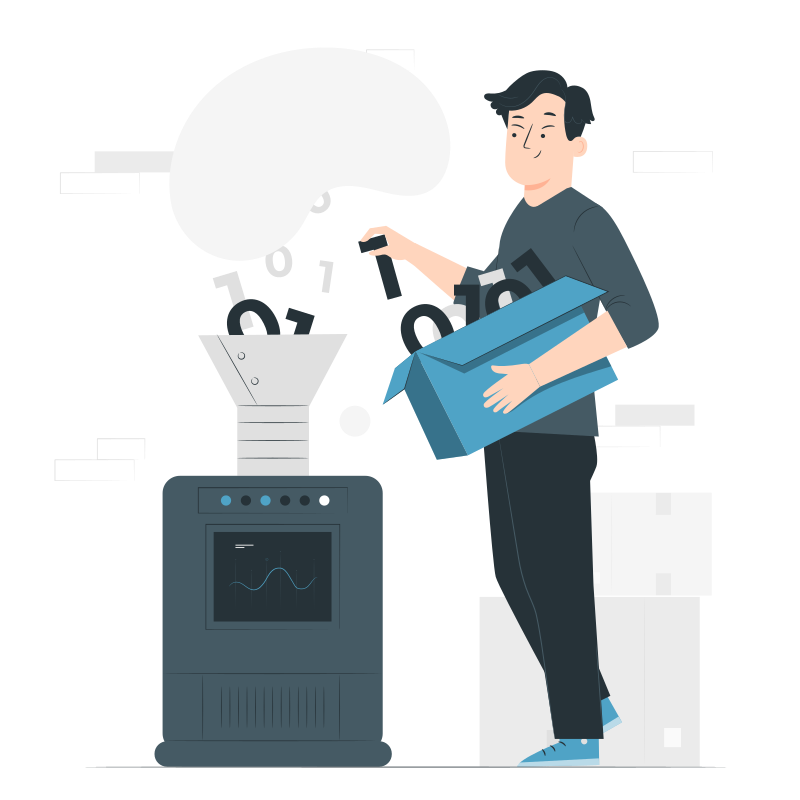
A Couple of Examples Anyone Can Relate To
Searching your photos. Not long ago, finding a specific photo meant scrolling for ages. Today you can type “beach” or “birthday cake” into your phone and the right photos appear, even though you never tagged a single one. The app is still just a gallery. AI simply augmented the search so it understands the content of images, not only their file names and dates.
Email that helps you write. Your inbox has looked more or less the same for twenty years: a list of messages and a reply button. But now, when you start a reply, the software suggests how to finish the sentence, or offers quick responses like “Sounds good.” Writing and sending email works exactly as before. AI just quietly removed some of the tedious typing.
Neither example asked you to learn a new tool. That is the point. The best augmentation is nearly invisible: you just notice that something annoying is suddenly easy.

Why This Matters for Your Product
If you already run software, you are probably sitting on features that could be augmented today: a search that could understand natural language, a support inbox that could summarize long threads, a form that could fill itself in from a document.
None of these require throwing away what you have built. That usually means lower risk, lower cost, and a faster path to something your users actually feel. The trap to avoid is treating AI as a checkbox, bolting a chatbot onto a homepage and calling it done. Real efficiency comes from finding the moments where users wait, retype, or give up, and removing that friction.
Where to Start
Start small and start where it hurts. Look for the one workflow your users complain about most, then ask a simple question: “If this feature could make a smart guess here, would it save real time?” If the answer is yes, that is a candidate for augmentation.
We help teams do exactly this: find where AI genuinely improves an existing product, and implement it in a way that is reliable, measurable, and maintainable, without a risky rewrite. If you are curious what that could look like for your software, get in touch. The first conversation is always free.