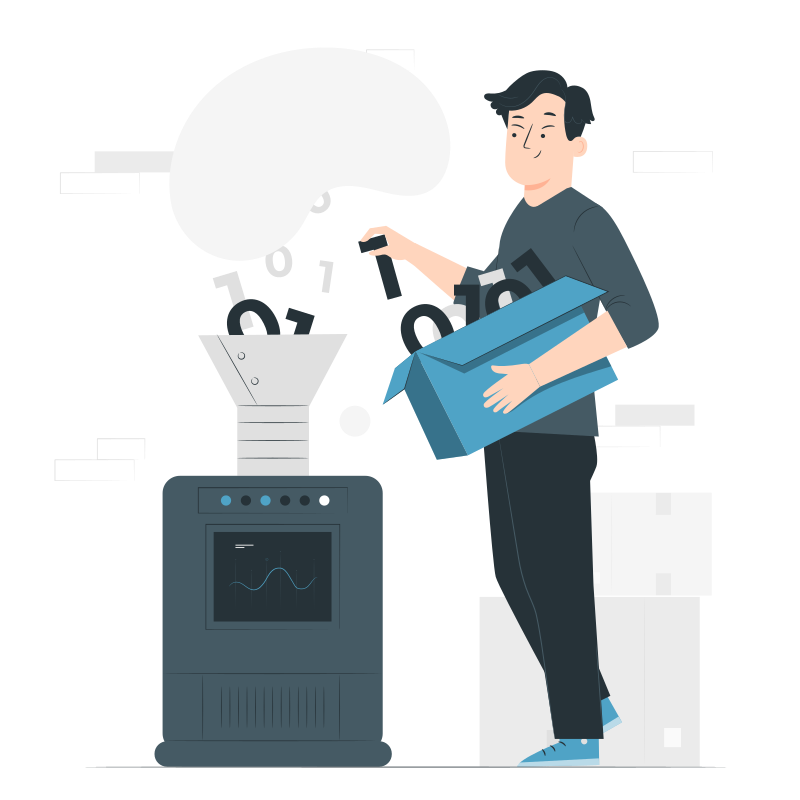
A few years ago, if someone showed you a clean landing page or a nicely written article, you could safely assume they had put real time into learning how to do that. Today you can get either one in about a minute, from a two-line prompt, and it will look fine. Often better than fine.
We have heard the same question from designers, writers, and developers we know: if a model can do this, what was all that practice for?
When Polish Stopped Being Rare
Some things really did get cheap, and there is no point pretending otherwise.
A competent paragraph used to take practice. So did a usable illustration, or a layout with sensible spacing and type, or a basic admin screen that a developer would have spent most of a day on. Now anyone with a browser can produce all of these at roughly the cost of describing them.
Once something is easy to get, it stops telling you anything about the person who made it. A polished design used to suggest a designer was involved. Fluent copy suggested somebody had thought about the message. A working demo suggested the person understood how it worked. None of those assumptions hold anymore, and it is tempting to take the next step and decide the skill itself has lost its value.
We would push back on that, mostly because we have seen this happen before.
The Tools Always Define the Baseline
Every new generation of tools has done this to the skills that came before it.
The printing press made a hand-copied manuscript ordinary. Desktop publishing turned typesetting into something you could do at home. Autofocus and digital sensors made a sharp, properly exposed photo the default. Website builders made having a website a ten-minute job, and modern frameworks turned months of team effort into an afternoon of configuration.
What used to be a professional skill became the baseline, the quality anyone can reach with the tools of the day without much talent or effort. Every time, someone announced that the profession was finished.
It kept not being finished. The floor moved up instead. Nobody is impressed by a sharp photo now, yet some photographers still make you stop scrolling. Every business has a website, and you can still tell within a few seconds which ones somebody actually cared about.
AI is probably the biggest single jump in that floor we have lived through. But it is still a floor: what you get when you use the tool the same way everyone else does.
The Difference Lives Above the Baseline
If everyone can reach the baseline, nobody is going to pay for it. What people pay for is the distance between what the tool gives you by default and what a skilled person turns it into.
A big part of that distance is deciding what to make in the first place. A model will build whatever you ask for, including the wrong thing, very efficiently. Knowing what is worth building and what to leave out is still on you.
Then there is noticing when something is off. Generated work tends to be plausible, and plausible is exactly what makes mistakes easy to miss: the paragraph that sounds good and says nothing, the design that buries the one action users need, the code that works until the second real customer signs up. Catching those takes experience, usually the kind earned by getting it wrong yourself a few times.
Taste matters more than it used to, too. You can now have ten acceptable options in seconds, so the work has shifted to picking the right one for this client and this audience. Add to that all the context that never makes it into a prompt (the history of the business, the people involved, the constraint everyone forgot to mention) and the plain fact that someone has to answer for the result when it matters.
AI did not make any of this obsolete. If anything it made it easier to see. When the routine part of the job was slow and expensive, effort and skill were easy to mix up. With the routine part nearly free, judgment is most of what is left to compare.
You can see it when two people get the same model and the same brief. One takes the first output and ships it. The other argues with it, rewrites half, throws some of it away, and keeps pushing until it looks like something specific rather than something generic. Both of them used AI, but only the second result stands out from everything else being made with the same tools.
This Is How It Will Always Be
The tools will keep getting better. Next year’s baseline will sit higher than this year’s, and some of what counts as expert work today will just be the default in a couple of years. That has happened with every tool before, and we see no reason AI would be the exception.
We do not find that discouraging. The people who do well are the ones who use the new tools fully, let them take over whatever has become routine, and put the time they get back into the part that still needs a person. Trying to compete with the baseline is a losing game. Building on top of it has always worked.
How We Think About It
AI is part of nearly everything we do at the agency now. It writes first drafts, scaffolds code, and lets us try three approaches in the time one used to take. We are glad to have it, because it gets our clients to the baseline almost immediately.
We just do not treat that as the finished product. The work clients actually hire us for starts there: figuring out what to build, catching what is subtly wrong, and caring enough to keep at it until the result is properly good.
If that sounds like the kind of team you are looking for, we would be happy to talk.